Soft washing relies on chemistry and controlled rinsing
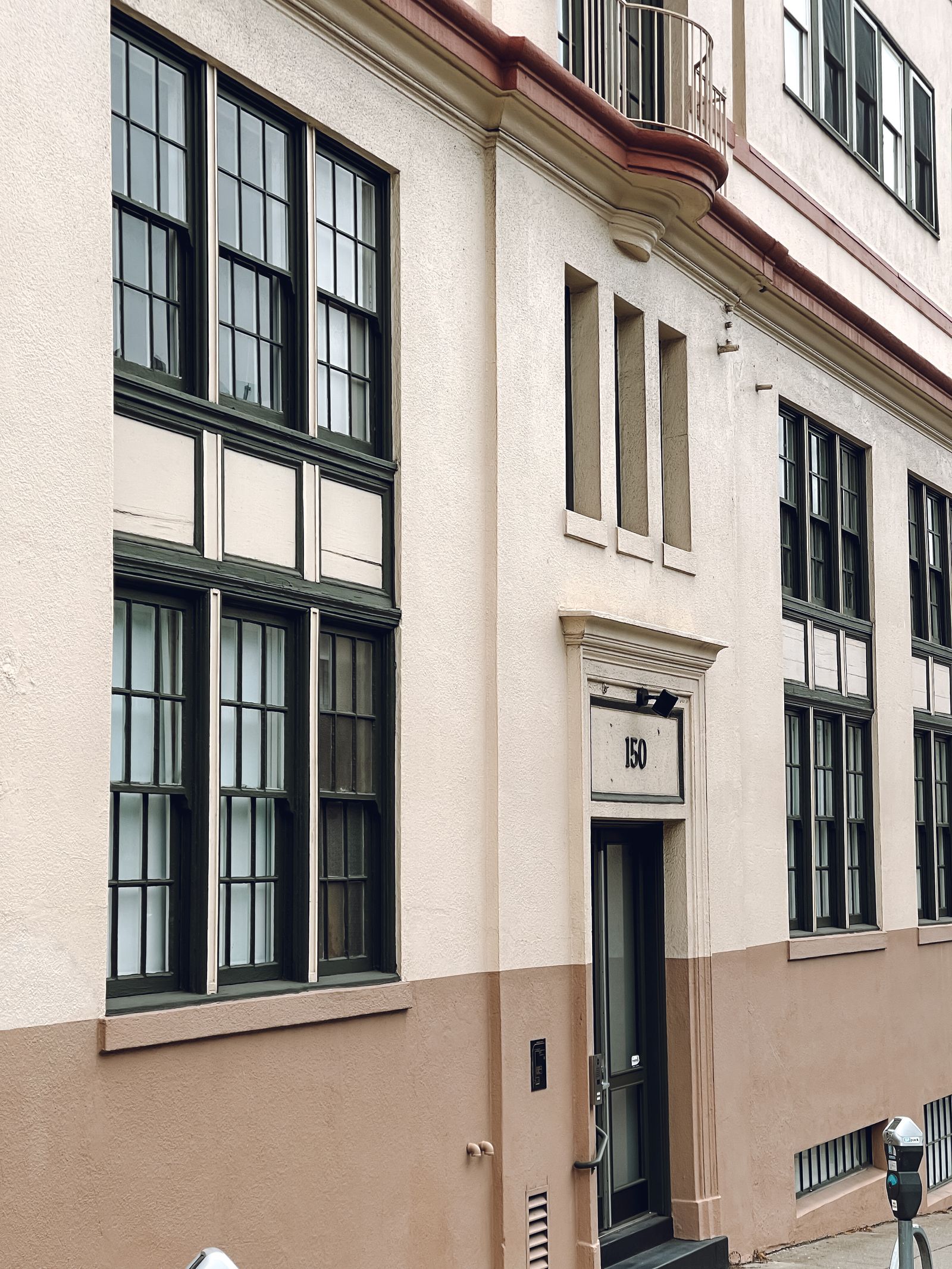
Soft washing generally uses a compatible cleaning solution, lower application pressure, dwell time, and a controlled rinse. It may suit organic-looking staining, pollen, bird residue, and some atmospheric film on compatible masonry, painted metal, siding, stucco, EIFS, concrete, or stone after testing and protection. The lower pressure can reduce impact on a vulnerable finish, but it does not make every chemical suitable for every surface. Concentration, dwell time, temperature, wind, drying, and the rinse still require judgment.
In Bozeman, this method may be useful on a shaded north elevation, a canopy with growth-like staining, or a facade that accumulated pollen and dust during a workable warm-weather window. It is less likely to be a complete answer for bonded mineral scale, oxidation, road grit, heavy construction dust, failed paint, smoke residue, or a wall repeatedly wetted by a roof defect. The word soft describes pressure, not a guarantee of zero risk or complete removal.
Ask for a written soft-wash scope that names test areas, solution assumptions, dwell time, rinse approach, protection for plants and air intakes, weather limits, and expected improvement. A test can reveal loose paint, chalking, color shift, friable mortar, or a deposit that needs specialty restoration. It also gives the owner a better basis for deciding whether a broad facade phase is worth scheduling.
Pressure washing has a place on durable surfaces
Pressure washing uses water impact to release soil. Controlled pressure may be appropriate for durable concrete walks, loading aprons, service yards, dumpster pads, and selected lower-wall areas when the substrate and nearby activity support it. It can help with loose mud, gravel dust, and surface soil left by winter traffic or construction. Pressure, nozzle, distance, flow, temperature, and operator movement should be chosen for the material rather than copied from one machine setting.
Risk rises when force is used on aged brick, mortar, EIFS, stucco, painted metal, wood, storefront joints, sealants, or a coating with poor adhesion. Impact can expose aggregate, scar a finish, open a joint, strip paint, drive water behind cladding, or move dirty water through a threshold. In a mixed-use Bozeman property, a durable loading pad might justify controlled pressure while the adjacent panel, canopy, and glass need low-pressure rinsing or hand detailing.
A proposal should map the method by material and elevation. A lower price based on one pressure setting may leave the owner with damaged finishes, incomplete stain removal, or a second mobilization. The comparison should include setup, protection, access, hand work, test areas, weather contingencies, and the expected result for each zone.
Identify the Bozeman soil before choosing the equipment
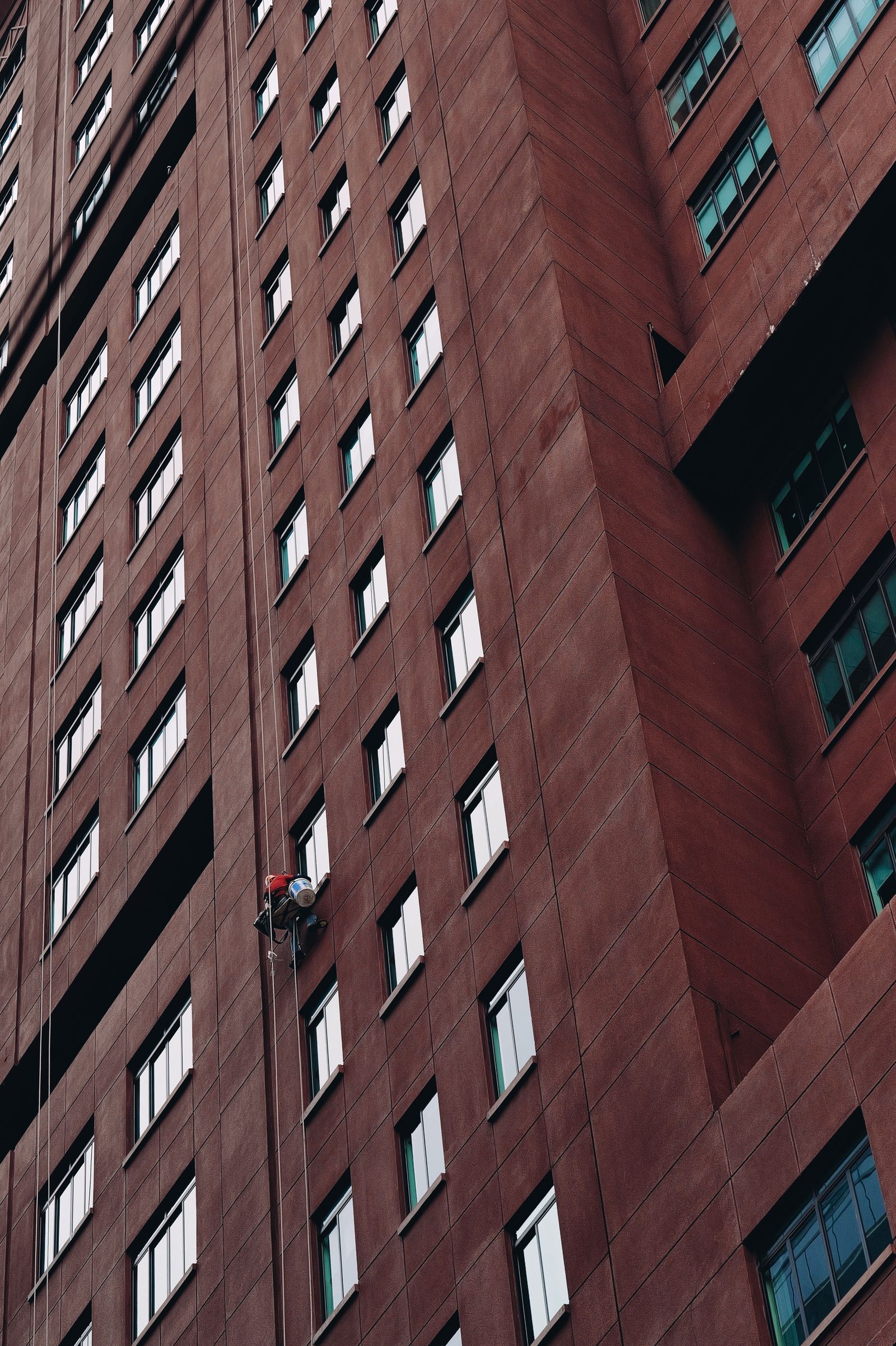
A dark facade in Bozeman does not automatically indicate algae or mildew. Traffic on Main Street, 7th Avenue, 19th Avenue, Ferguson Avenue, or I-90 approaches can leave exhaust and road film. Spring thaw can create a band of grit, mud, and deicer residue around entrances. Construction nearby can add fine dust. A north-facing wall may show organic staining, while a sunny painted-metal elevation shows oxidation or chalking. Smoke and dust can affect broad upper surfaces without behaving like a biological deposit.
Read the pattern before reading the machine gauge. A vertical mark below a scupper, a band behind stored snow, a splash zone at a drive lane, a broad shaded elevation, and spots below a vent each suggest different questions. Check roof edges, gutters, downspouts, joints, condensate, snow storage, irrigation, exhaust paths, and adjacent paving. If the building keeps a section wet, washing alone may only produce a temporary improvement.
Representative testing helps separate chemistry, pressure, agitation, rinsing, and specialty treatment. It can show whether the deposit releases, whether a coating is weak, and whether a substrate has already been damaged. The result should guide the scope and identify when a mason, roofer, painter, metal specialist, or building-envelope professional should take over.
- Separate organic staining, road film, smoke residue, grit, minerals, oxidation, and failed coatings.
- Read patterns at snow-storage bands, roof edges, drive lanes, vents, joints, and shaded elevations.
- Use a representative test before promising uniform removal across mixed materials.
- Treat leaks, corrosion, loose coating, cracked masonry, and failed sealant as building conditions.
Let cold, wind, and thawing change the schedule
Temperature affects both methods. Cold water and cold surfaces can slow chemical response, extend dwell time, reduce drying, and leave water at thresholds or joints. A rinse that looks controlled can become a slip or refreeze issue after sunset. Snow berms can redirect flow as they thaw, and wind across a large lot can move spray toward pedestrians, vehicles, plants, air intakes, or another tenant. A technically possible workday may still be operationally wrong.
Soft washing needs enough time for the solution to work without drying unevenly or being diluted by rain. Pressure washing needs enough drainage and drying that water does not remain in vulnerable assemblies or public routes. Spring and fall require attention to rapidly changing temperatures; summer can offer longer daylight but also pollen, storms, dust, and busy outdoor spaces. The property team should set minimum surface temperature, wind, precipitation, lightning, daylight, and refreeze triggers before mobilization.
Weather planning also protects the schedule. If one elevation is sunny and another is shaded, the same dwell or drying assumption may not apply. Phasing can move the most visible entrance into the best window while leaving a less sensitive service elevation for another day. A written pause rule is more useful than an informal promise to watch the sky.
Compare access and public safety with the cleaning method
Both methods need practical access. A lift may require a stable, cleared surface and room to position around snow, parked vehicles, utilities, trees, and active drive lanes. Water-fed poles can reach some glass and lower elevations but do not solve every high or recessed condition. Hand work remains important around doors, signs, canopies, louvers, and architectural details. Hoses, barriers, cords, and equipment must preserve accessible routes, delivery paths, emergency access, and tenant movement.
Aerial assistance may help on selected broad upper elevations, but it does not eliminate site control. Wind, stand-off distance, launch and recovery space, people, vehicles, cranes, lines, trees, rooftops, airspace, and drainage all matter. Properties near Bozeman Yellowstone International Airport need additional operational review, and commercial drone activity must follow applicable Federal Aviation Administration requirements. If separation or visibility is inadequate, use a lift, pole, ground setup, or hybrid plan.
Access changes the method's value. A broad warehouse wall may be efficient to treat from a controlled setup, while a downtown block with narrow sidewalks may need short phases and hand detailing. Ask the contractor to separate access equipment, aerial zones, barriers, setup, protection, and detailing in the quote so a low initial number does not hide an incomplete scope.
Use runoff to test whether the plan is complete
Soft-wash solution, rinse water, loosened organic material, pressure-released grit, and residue can all travel toward a curb inlet, catch basin, landscaped area, garage ramp, or neighboring property. Bozeman snowmelt can change the route during the job. The plan may require diversion, collection, recovery, reduced rinse volume, filtration, plant protection, disposal, or coordination with the responsible authority. A drain in the parking lot is not automatic permission for treated water to enter it.
Watch the first rinse around thresholds, curb cuts, slopes, snow piles, low points, and shared parking. Confirm that barriers, hose lines, covers, recovery equipment, and absorbent materials are still in the right place. Stop when actual flow differs from the agreed plan. This matters at medical entries, downtown sidewalks, hotels, restaurants, industrial yards, and retail lots where water can cross a tenant boundary quickly.
Runoff questions are also useful for comparing contractors. Ask who identifies flow paths, who controls treated water, what happens if weather changes, how plants and drains are protected, and what documentation is provided. A sound scope makes the boundary between exterior cleaning and environmental or building compliance visible to the owner and facility team.
Make the decision with a method-specific quote
Start with surface and soil, then review condition, access, weather, public activity, and runoff. Soft washing may be the better candidate for compatible organic staining and delicate finishes when testing supports it. Controlled pressure may make sense on durable concrete, service areas, or loose surface soil where impact will not damage the substrate. A hybrid plan is often the most accurate choice for a property containing panels, masonry, glass, concrete, loading areas, and lower walls exposed to different conditions.
Request a written scope naming elevations, materials, method, test areas, access, working hours, protection, drainage assumptions, weather triggers, expected improvement, exclusions, and follow-up documentation. Share photos of the entry, upper wall, roof edge, snow line, loading area, glass, and drains. Mention airport proximity, deliveries, patient care, student traffic, dining, events, or public access. Those details improve the decision more than asking for the strongest available wash.
For a Bozeman consultation, call +1 239-351-2897 or email contact@dronebuildingcleaners.com. Drone Building Cleaners can help compare soft washing, controlled pressure, aerial assistance, and hybrid access against the building's actual conditions. The goal is a cleaner property and a method that respects the facade, the operating schedule, the weather window, and the route the water takes after it leaves the wall.